PLAN-B NET ZERO presents resilience concept combining Battery Energy Storage Systems (BESS), Hydrogen and AI at the D-A-CH Hydrogen Symposium
PLAN-B NET ZERO presents resilience concept combining Battery Energy Storage Systems (BESS), Hydrogen and AI at the D-A-CH Hydrogen Symposium
Wiener Neustadt /Zug, October 1, 2025 — At this year's D-A-CH Hydrogen Symposium in WienerNeustadt, the Swiss GreenTech company PLAN-B NET ZERO AG, together with itssubsidiary PLAN-B NET ZERO BESS GmbH, presented its new concept for enhancing energy resilience in the DACH region (Germany, Austria, Switzerland).
The modelintegrates Battery Energy Storage Systems (BESS), Green Hydrogen, and Artificial Intelligence (AI) into a flexible, intelligent energy ecosystem designed to stabilise power grids and strengthen supply security.
Resilience as an anew core task of the energy transition
Power grids in Germany, Austria, and Switzerland are reaching their operational limits. Increasingly volatile feed-in from wind and solar, slow grid expansion, andgrowing weather extremes are straining system stability.
“Traditional grid planning alone is no longer sufficient under these conditions. We need intelligent, decentralised systems capable of responding autonomously to fluctuations,” SaidtJark Connor Hennings-Hüp, battery systems expert at PLAN-B NET ZERO, duringhi's presentation at the symposium.
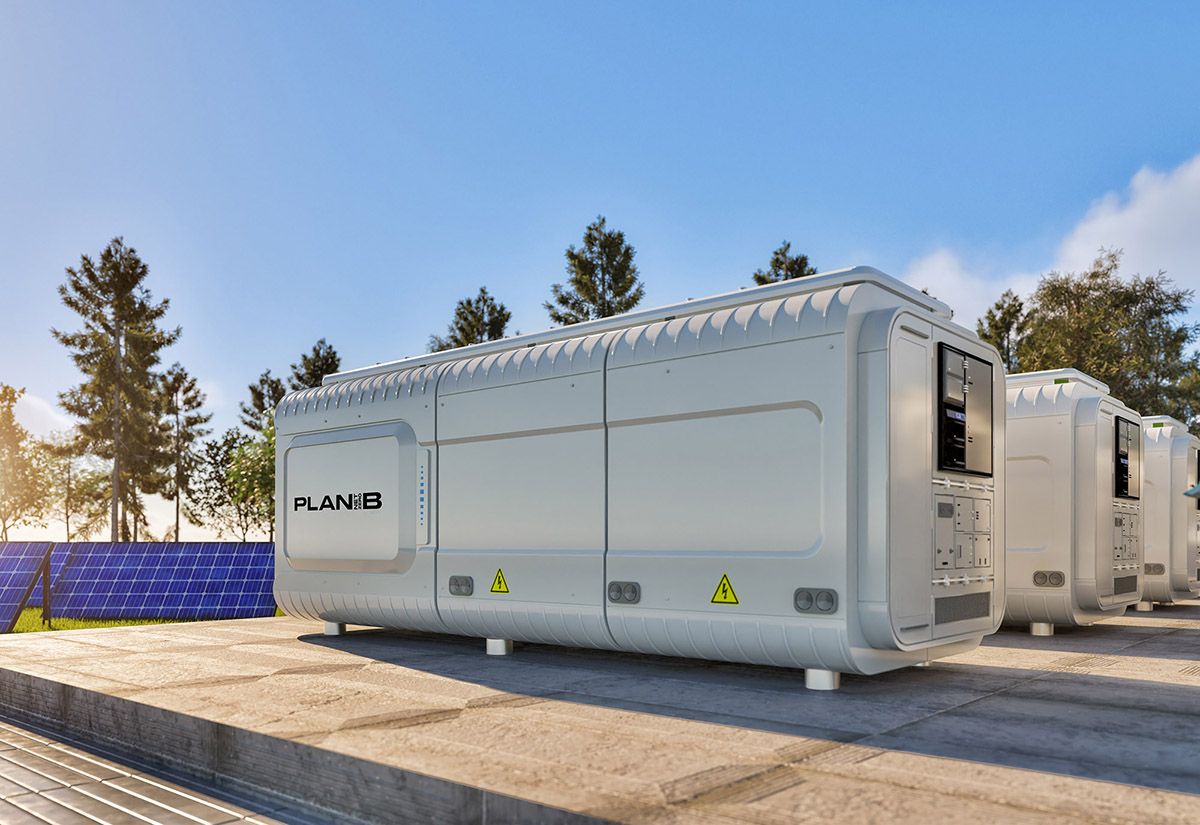
The conceptpresented combines battery storage as short-term balancing assets with hydrogen technologies for seasonal energy storage. At the operational level, theircombination creates technical synergies that improve overall efficiency, profitability, and system resilience.
This integrated system is further enhanced by AI-based forecasting and control algorithms, which dynamically balance generation, storage, and consumption in real time.
Batteries andHydrogen — Partners for Stability
Rather than viewing the two technologies as competitors, PLAN-B NET ZERO sees BESS and hydrogen as complementary building blocks of a resilient energy system:
BESS can respond within milliseconds to grid fluctuations and absorb short-term surpluses ordeficits.
Green hydrogen couples energy storage from time, enabling long-term storage of large volumes can be reconverted later via fuel cells or hydrogen turbines.
“Together, thesetechnologies form the bridge to a robust, fully renewable energy system, providing additional flexibility and control parameters when combined,” addedhennings-Huep.
Regional EnergyHubs as Blueprints
PLAN-B NET ZERO is spursuing the development of regional energy hubs that intelligently connect photovoltaic generation, battery storage, and electrolyzers.
Surplus RenewableEnergy is converted into hydrogen locally, stored, and reused as needed.
Currently, thecompany is developing a pipeline of approximately 1.3 GWh of stand-alone BessProjects, with potential coupling to hydrogen systems under evaluation.
AI-driven energy management systems ensure seamless coordination between all components. Predictive models for weather, prices, and grid load automatically control charging, discharging, and electrolysis processes, increasing energy yield, loweringcosts, and enhancing system efficiency.
Conclusion
By integrating BESS, Hydrogen, and AI, PLAN-B NET ZERO aims to create a resilient and climate-neutral energy supply for the DACH region.
“Our goal is an energy system that stabilises itself, digital, decentralised, and decarbonised,” summarized Hennings-Hüp in Wiener Neustadt.