"Our platform gets smarter with every interaction"
"Our platform gets smarter with every interaction"
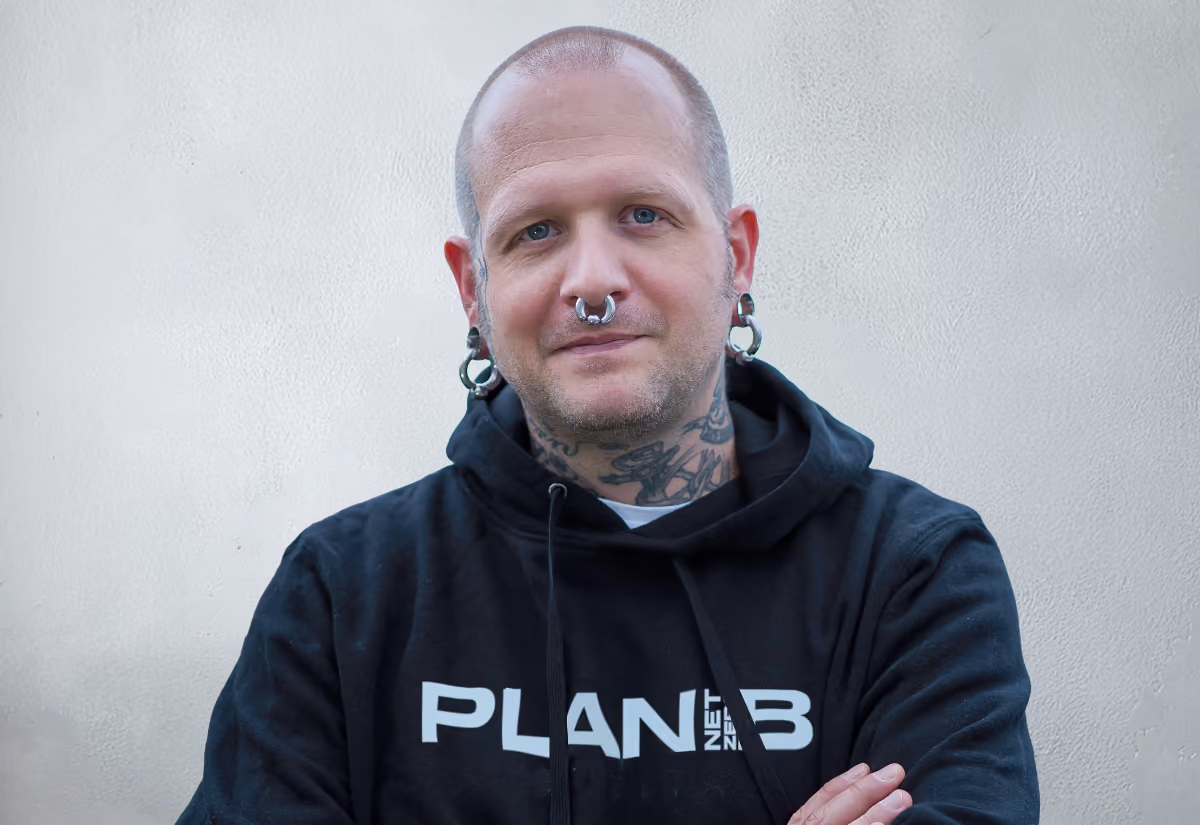
Interview with Steven Rohner, Chief Technology Officer of PLAN-B NET ZERO AG, on expanding the company's own energy platform, data-driven business models, and opening up to external partners.
PLAN-B NET ZERO AG is developing its business model beyond classic electricity supply and is making its own platform available to other companies as Platform-as-a-Service ("PaaS"). In addition to a first PaaS customer, another customer from the energy sector is now using the company's technology platform. PLAN-B is also in talks with an internationally active company from the Health & Longevity sector about a possible collaboration. In this interview, CTO Steven Rohner explains how the company's technological infrastructure is built, what role the NeoGate Portal and the Customer App play, and why data is crucial to the scalability of the platform model.
Mr. Rohner, PLAN-B is increasingly opening up its technology platform to external partners. What is the core of this approach?
Steven Rohner: At its core, this is about not using our technological and operational infrastructure exclusively for our own electricity customer business, but making it available to partners as well. Our platform combines energy supply, digital customer interaction, data-driven processes, and operational control within an integrated architecture.
For external partners, this means: they gain access to an infrastructure that allows them to build, manage, and further develop customer relationships digitally. That's why we don't understand Platform-as-a-Service as the isolated outsourcing of individual processes. Rather, it's an integrated system that brings different functions together and gains reach and usability with every additional connection.
Which components make up this infrastructure?
Steven Rohner: The NeoGate Portal plays a central role. It's the operating system of our digital ecosystem, where the key data and processes converge. This includes a complete energy CRM with information on customers, tariffs, contracts, consumption, and payments on account, as well as functions for lead management, survey control, and the configuration of affiliate and sales partners.
In addition, there's our own tariff calculator and an acquisition and affiliate engine. Through referral codes and referral URLs, partners and customers can also be integrated into acquisition. At the same time, incentives and further interactions can be centrally controlled. The architecture is designed to handle significantly larger user numbers and to scale to more than one million users going forward.
What function does the Customer App take on within this system?
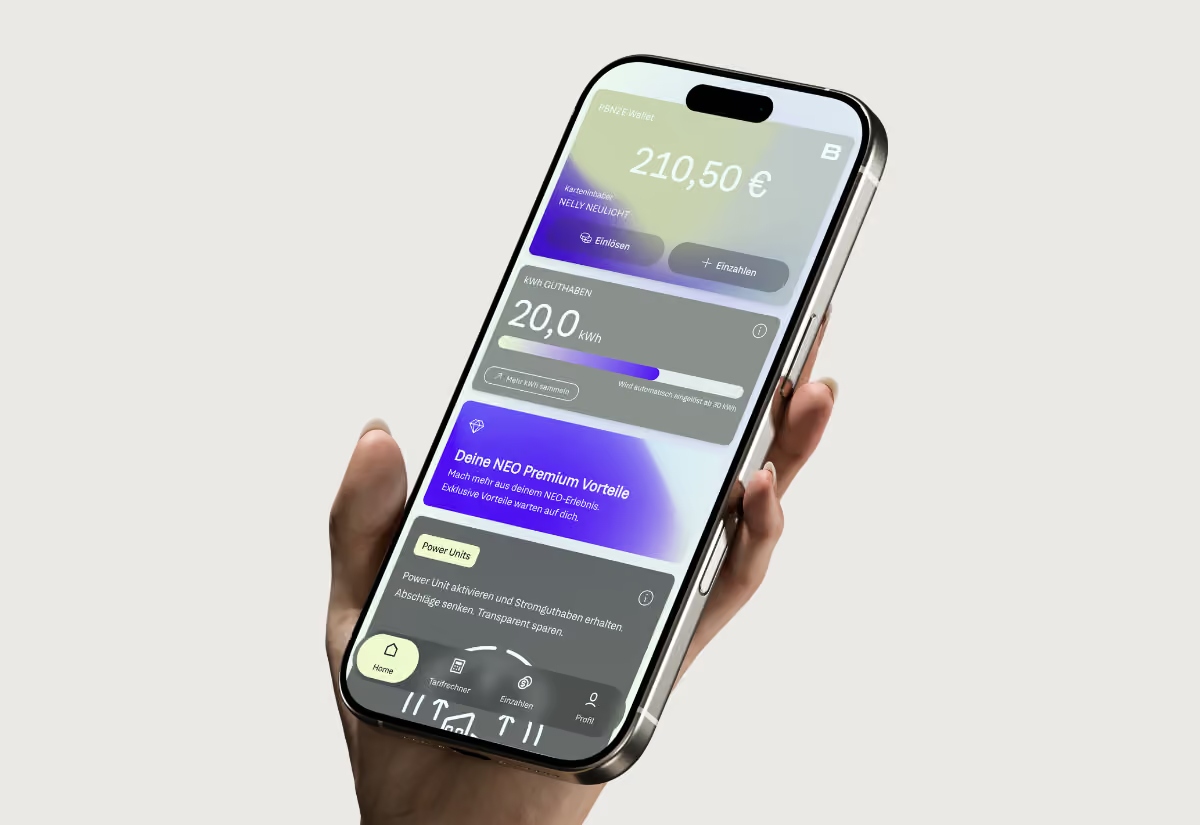
Steven Rohner: The Customer App is our flagship product at the interface with the user. Through it, customers can, for example, record meter readings, view payments on account, and initiate tariff switches. Beyond that, the app creates additional interaction opportunities — for example through surveys with kWh rewards, gamified elements of customer loyalty, as well as the NeoMarketplace and premium subscriptions.
Crucially, the app doesn't function as an isolated digital channel. It's deeply interlinked with the NeoGate Portal. Every interaction can therefore feed into further processes — from customer service to segmentation to personalized offers. Our technological strength lies not just in digitalization, but in building a platform that gets smarter and more scalable with every interaction and creates an active community that grows out of itself.
You mention a Data Engine. What exactly does that mean?
Steven Rohner: The PLAN-B Data Engine structures data from three sources. First, we have proprietary data generated within our own business — for example, information on electricity customers and contracts, tariffs and consumption, invoices and payments on account, as well as app and marketplace usage. Second, we generate additional data points from these interactions, such as customer scores, churn forecasts, customer lifetime value, or leads for cross-selling. Third, external data sources can be added, including weather data, wholesale electricity prices, KYC and credit information, data from banks and insurers, as well as information from smart devices, photovoltaic systems, and partner or location data.
The technical and economic value emerges from the interplay of these layers. Individual data points turn into segmentations, customer journeys, and more comprehensive buyer personas. On this basis, subscription models, affiliate offers, and cross-selling can be developed more precisely, for example. In addition, AI-generated recommendations and dynamic AI dashboards can help make decisions faster and more individually.
What significance does artificial intelligence have for the platform?
Steven Rohner: For us, artificial intelligence is above all a tool for translating the large volume of data into actionable insights. This includes things like customer scores, recommendations, churn risk forecasts, or estimates of customer lifetime value. What matters here isn't the technology for its own sake, but its concrete contribution to better customer relationships and more efficient processes.
Another focus is the planned expansion into Health & Longevity. How flexible is the platform for use outside the energy sector?
Steven Rohner: The platform is built modularly. Many core functions — such as managing customer relationships, leads, partners, contracts, and interactions — aren't limited to a single market. That's precisely a key advantage of our architecture.
At the same time, cross-industry use doesn't mean every partner adopts the same processes. Different industries have different customer needs, data structures, and regulatory requirements. That's why workflows, interfaces, permissions, and the specific design of the customer journey need to be adaptable. The technological foundation remains integrated, while the processes built on top of it can be flexibly configured.
What sets PLAN-B apart from a classic energy supplier from a technical perspective?
Steven Rohner: A classic energy supplier typically focuses on the reliable delivery of energy and the handling of the related processes. That is, of course, a central foundation for us too. However, we go a step further and combine supply with digital interaction, data intelligence, and scalable platform technology.
The customer is viewed as part of a digital ecosystem. Every interaction — a tariff switch, a survey, use of the app, or a marketplace contact — can help improve understanding of the customer and develop further relevant offers. Our technological strength thus lies in combining operational energy expertise with digital learning capability.
How will the success of the technology platform be measured in the future?
Steven Rohner: User numbers are an important starting point, but not sufficient on their own. We'll also look at how actively users engage with the platform, how strongly customers are bound to the offerings, and what contribution individual functions and partner relationships make.
What is the next step in development?
Steven Rohner: The next step is to open the platform to further partners and to interlink the existing components even more closely. Every new connection delivers additional experience and expands the potential user and partner network.
This is about controlled scaling. Technological openness must be combined with stability, data protection, security, and clear governance. If we succeed in striking this balance, the platform can become an infrastructure that not only supports our own electricity business but also offers concrete digital value to external partners and other industries.
What is the NeoGate Portal and what role does it play within the PLAN-B platform?
The NeoGate Portal is the central operating system of PLAN-B's digital ecosystem. It bundles a complete energy CRM with customer, tariff, contract, and consumption data, along with functions for lead management, survey control, and configuration of affiliate and sales partners. It also includes a tariff calculator and an acquisition engine, and its architecture is designed to scale to more than one million users.

Read more
How does PLAN-B plan to use its platform outside the energy sector in the future?
According to Rohner, the platform's modular design means core functions like customer relationship, lead, and contract management can be applied across industries. For new sectors such as Health & Longevity, where talks are already underway with an international company, workflows, interfaces, and customer journeys can be individually adapted while the technological foundation remains integrated.
Read more